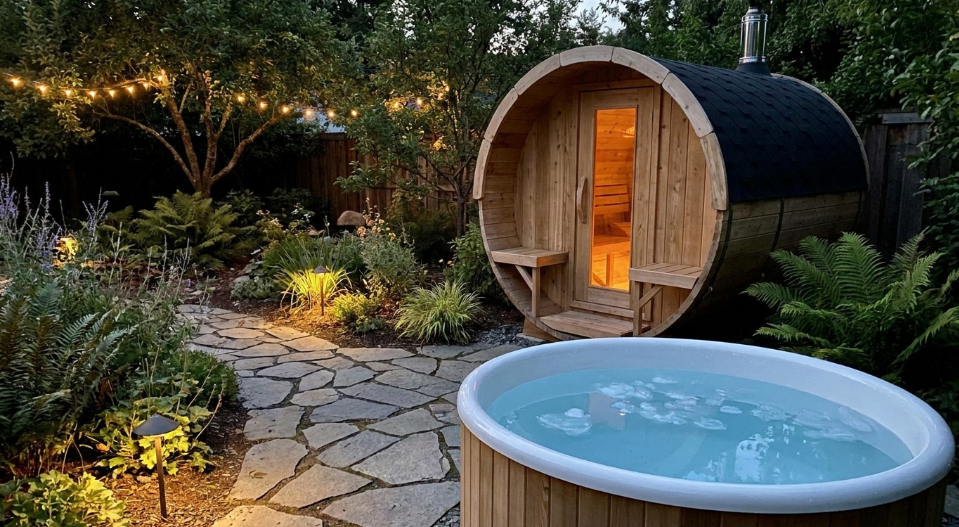

Electric sauna heaters suit most suburban and urban backyards well because they run on a timer, need no chimney, and produce no smoke, while wood-burning heaters fit off-grid cabins, rural properties, and anyone who wants the ritual of tending a real fire rather than flipping a switch. Both reach the same 170 to 195 degree Fahrenheit range that defines a proper sauna; the difference is almost entirely about your property, your electrical access, and how hands-on you want the experience to be.
Use Case: A Backyard Sauna in a Suburban Neighborhood
In a neighborhood with houses close together, an electric heater is usually the more practical fit. There’s no smoke to drift toward a neighbor’s yard, no chimney to permit or maintain, and you can start it on a timer so it’s ready by the time you get home from work. Most homes already have or can add the 220 to 240V circuit a mid-size electric heater needs, and that installation is a one-time electrician visit rather than an ongoing consideration every time you want to use the sauna. Local fire codes in denser areas also tend to be stricter about wood-burning appliances, which is worth checking before you plan around one.
Use Case: An Off-Grid or Rural Cabin
Here the calculation flips. A wood-burning heater doesn’t depend on grid power at all, only a supply of dry, seasoned firewood and a properly installed chimney with the correct clearance to the roofline. For a cabin without reliable electrical service, or one where running a dedicated high-voltage circuit would mean a long and expensive trench, a wood-burning heater sidesteps the entire electrical question. The tradeoff is that heat output is less precise than a thermostat-controlled electric unit, and you need somewhere dry to store firewood, plus regular chimney inspection for creosote buildup.
Use Case: Daily Short Sessions vs Occasional Longer Ones
If the plan is quick, frequent sessions, several times a week after work or a workout, an electric heater’s push-button convenience and predictable 30 to 45 minute warm-up fit that rhythm better. Tending a wood fire each time adds real time and effort that can turn a quick habit into an occasional one instead. For people who use their sauna less often but want to make it more of an event, a weekend ritual rather than a daily routine, the extra involvement of building and managing a wood fire is often part of the appeal rather than a drawback.
Use Case: Someone Weighing Long-Term Running Costs
Electric heaters draw a predictable amount of power that shows up on your electric bill, calculable in advance once you know the heater’s kilowatt rating and how often you’ll run it. Wood heat cost depends heavily on whether you’re buying firewood or have access to your own supply; buying seasoned wood regularly can approach or exceed electric running costs in some regions, while cutting your own from a rural property can make wood heat close to free apart from your own labor. Neither option is categorically cheaper; it depends entirely on your local electricity rates and whether firewood is a cost or something you already have on hand.
Installation cost belongs in this comparison too, not just ongoing running cost. An electric heater generally needs a dedicated 220 to 240V circuit run from the home’s panel, which an electrician typically prices by distance and any wall or ceiling penetrations required. A wood-burning heater needs a code-compliant chimney with the correct roof or wall penetration and clearance to any combustible material, plus a hearth pad under the heater itself. Depending on your specific property, one of these can turn out meaningfully cheaper than the other, so it’s worth getting quotes for both before assuming the heater purchase price alone tells the full story.
How to Actually Choose Between the Two
Start with what your property can support: grid access and an electrician’s quote for an electric heater, or a legal, properly clearanced spot for a chimney for a wood-burning one. Then weigh how you actually want to use it. If convenience and consistency matter most, electric wins. If the process of building and tending a fire is part of why you want a sauna in the first place, or if you’re off-grid entirely, wood is the better fit even with the extra effort. Whichever direction you lean, a dedicated sauna retailer will typically list both electric and wood-burning models side by side with clearance and sizing specs, which makes comparing real options easier than working from generic rules of thumb alone.
Use Case: Renting the Property vs Owning It Long-Term
If you’re renting or expect to move within a few years, an electric heater tied to a portable or smaller freestanding cabin is generally the easier asset to take with you or sell, since it doesn’t involve a permanent chimney penetration through a roof. A wood-burning setup, with its chimney and often a poured or built-up foundation pad, is more of a permanent fixture, which makes more sense for a property you plan to own and use for a decade or longer. Buyers of a home with an existing sauna often view a chimney-vented wood heater as a bigger commitment to inspect and potentially maintain than a simple electric unit, so it’s worth thinking about resale and mobility alongside your day-to-day preferences, not just how you plan to use it while you’re the one living there.
Frequently Asked Questions
Is an electric or wood-burning sauna heater better for a backyard in the suburbs? Electric heaters generally suit suburban backyards better, since they don’t require a chimney, produce no smoke that could bother neighbors, and can be run on a timer without tending a fire.
Is a wood-burning sauna heater better for an off-grid cabin? Yes, a wood-burning heater is often the more practical choice off-grid since it doesn’t depend on electrical service at all, only a supply of dry firewood and a properly installed chimney.
Which heats up faster, electric or wood? Electric heaters generally reach target temperature more predictably within 30 to 45 minutes on a thermostat, while a wood fire takes practice to manage and warm-up time varies more with wood type and how the fire is tended.
Do local rules restrict wood-burning sauna heaters? Many municipalities regulate wood-burning appliances and chimneys, including permits and setback distances from structures and property lines, so it is worth checking local codes before committing to a wood-burning model.
Which heater type needs less ongoing maintenance? Electric heaters generally need less hands-on maintenance day to day, since there’s no ash to clear or chimney to inspect, though both types need the stones checked and refreshed on a similar schedule.
References
- Hussain, J. et al. “Cardiovascular and Other Health Benefits of Sauna Bathing: A Review of the Evidence.” Mayo Clinic Proceedings, 2018. https://pubmed.ncbi.nlm.nih.gov/30077204/
- “Clinical Effects of Regular Dry Sauna Bathing: A Systematic Review.” Evidence-Based Complementary and Alternative Medicine, 2018. https://pubmed.ncbi.nlm.nih.gov/29849692/
- Laukkanen, T. et al. “Does the Combination of Finnish Sauna Bathing and Other Lifestyle Factors Confer Additional Health Benefits? A Review of the Evidence.” Mayo Clinic Proceedings, 2023. https://pubmed.ncbi.nlm.nih.gov/37270272/